How to Choose an Abstract Painting for a Living Room Wall
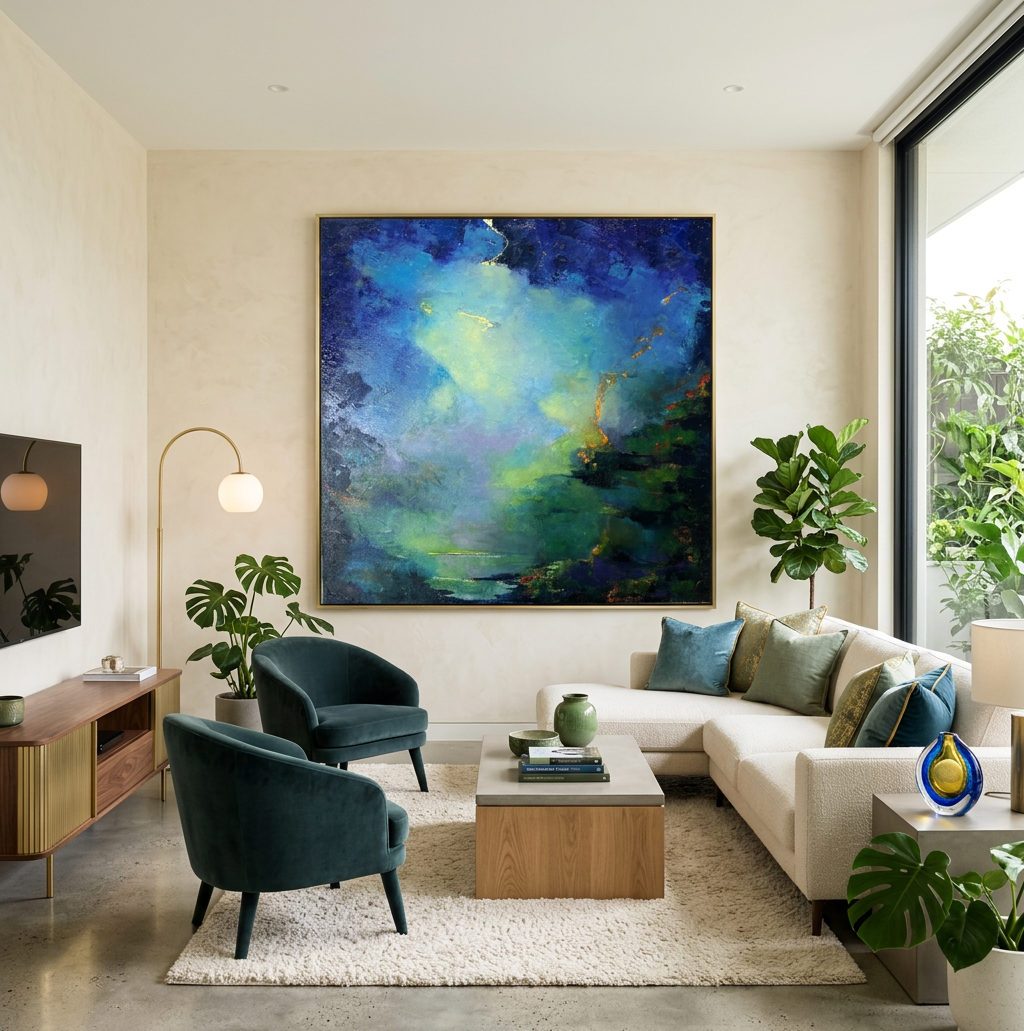
Choosing artwork for your living room is one of the most impactful design decisions you can make. The right piece can anchor the entire space, set the emotional tone, and reflect your personal style.
If you’ve been wondering how to choose an abstract painting for a living room wall, the process becomes much easier when you break it down into color, scale, composition, and emotional impact.
Abstract art is especially powerful in living rooms because it doesn’t dictate meaning—it invites interpretation. That means it can evolve with your space, your mood, and your life.
Start with Color: Set the Emotional Tone
Color is the first thing people respond to in a room, and abstract art gives you complete freedom to shape that atmosphere.
Ask yourself what you want your living room to feel like:
Calm and grounding: soft blues, greens, neutrals, muted earth tones
Energetic and expressive: bold reds, oranges, contrast-heavy compositions
Modern and minimal: monochrome, black and white, subtle tonal variation
When learning how to choose an abstract painting for a living room wall, color should always match the emotional purpose of the space—not just the furniture.
Get the Scale Right: Size Changes Everything
One of the most common mistakes people make is choosing artwork that is too small for the wall.
A general guideline:
The artwork should be about 2/3 to 3/4 the width of the furniture beneath it
Large walls need large-scale pieces or multi-panel works
Small artwork can get visually “lost” in open spaces
A properly scaled abstract painting doesn’t just decorate a wall—it becomes the anchor of the entire room.
Consider Composition and Movement
Abstract art can feel very different depending on how it is composed.
Flowing, organic movement creates softness and relaxation
Sharp contrast and structure creates energy and focus
Layered, textured pieces add depth and sophistication
When deciding how to choose an abstract painting for a living room wall, think about whether you want the artwork to calm the space or energize it.
Match the Art to Your Living Room Style
Your existing interior design should guide your selection.
Modern minimalist rooms: large, simple abstract pieces with clean composition
Boho or organic interiors: textured, earthy abstract paintings
Classic or transitional spaces: balanced compositions with soft color blending
Coastal-inspired homes: fluid blues, greens, and airy movement
The goal is not to match perfectly—but to create harmony.
Trust Emotional Response (This Is the Most Important Step)
Beyond design rules, abstract art is deeply intuitive.
When choosing a piece, pause and notice:
Does it make you feel calm or energized?
Do you feel drawn to it repeatedly?
Does it change the mood of the room when you imagine it there?
Often, the right artwork is the one you keep returning to emotionally, even if you can’t explain why.
That’s a key part of learning how to choose an abstract painting for a living room wall—trusting your response as much as design logic.
Final Thoughts
The best living room art doesn’t just fill space—it transforms it. Abstract paintings are especially powerful because they bring emotion, movement, and meaning without being literal.
When color, scale, and emotional resonance come together, your living room becomes more than a place to sit—it becomes a reflection of your inner world.
Explore Art for Your Living Room
If you’re ready to find a piece that elevates your space, explore abstract collections designed to bring balance, beauty, and presence into the home.